Some students want hands-on laboratory experience to explore biological processes or test scientific hypotheses through experiments. Others prefer using computational and analytical methods to investigate complex scientific questions and model real-world phenomena. You can also join a professor-led research programme to investigate your own question and produce an academic research paper.
This guide explores the science research opportunities available to high school students, the subjects you can investigate, and how to find a programme that fits your goals. It also talks about how CCIR can support
What Science Research Opportunities Can High School Students Explore?
Science research covers a broad range of subjects. Your project might involve laboratory experiments, computational modelling or mathematical analysis. It can even include a systematic review and meta-analysis that synthesises findings from existing scientific literature to identify patterns, evaluate evidence, and generate new insights. Here are some fields worth exploring.
Biology and biomedical science
Biology research explores how changes at the molecular level affect living systems. Students can investigate cellular mechanisms, genetic pathways, and disease processes. They can also use bioinformatics and machine learning to analyse biological data and explore precision medicine.
For example, The Rockefeller University’s Summer Science Research Program offers eligible high school juniors and seniors a seven-week, mentored laboratory research experience.
CCIR Academy offers research opportunities in biochemistry, molecular biology, bioinformatics, gene therapy, and precision medicine. Students can also explore computational biology and AI-driven drug discovery.
Through the Cambridge Future Scholar Research Programme or 1-on-1 Research Mentorship, students can investigate a scientific question with a professor mentor.
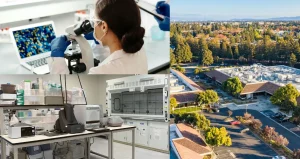
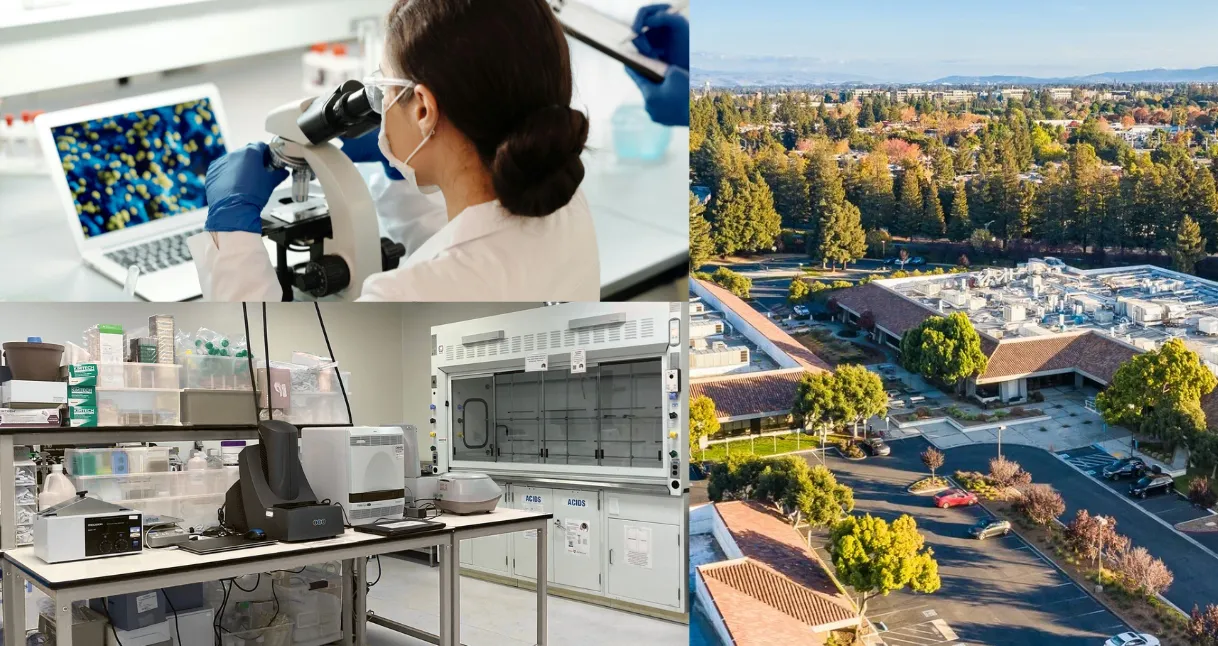
Students interested in experimental work can also explore CCIR’s laboratory facilities in Boston, near MIT. The facility provides a Biosafety Level 2 environment. PhD-level lab managers supervise student research. Proposed experiments require approval and must meet laboratory requirements.
Chemistry and materials science
Chemistry research examines how molecular structure affects chemical properties and reactions. Students can explore reaction mechanisms, catalytic processes, and advanced materials. These topics have applications in energy storage and sustainable materials.
This research can also help scientists develop efficient chemical processes and explore alternatives to environmentally harmful materials.
CCIR students can investigate chemistry through theoretical, computational, or experimental approaches. For example, a student interested in chemical engineering might study how machine learning can optimise a chemical reaction.
CCIR student Pranav Manne researched machine learning for chemical reaction optimisation. His work was accepted at three research events in 2026. It shows how computational methods can help identify promising reaction conditions, with potential applications in pharmaceutical development.
Explore more projects through the CCIR Student Research Spotlights.
Students interested in experimental chemistry can also explore CCIR’s Boston lab. The academic team can assess whether a proposed experiment is suitable. They can also explain the required approvals and materials.
Physics and astrophysics
Physics research explores the fundamental laws of the universe. Astrophysics uses theories and computational models to interpret astronomical observations. It also examines phenomena such as black holes and galaxy formation.
CCIR offers research opportunities in quantum physics, quantum computing, relativity, cosmology, and high-energy physics. Students can work with faculty mentors to develop focused research questions. They can then investigate these questions using mathematical or computational methods.
CCIR alumnus Michael Wei applied machine learning to classify quasars, galaxies, and stars using astronomical data. His project explored how artificial intelligence can help identify celestial objects.
Michael now studies at Stanford University. His experience shows how high school students can explore advanced scientific questions through professor-led research. Read more in the CCIR student research spotlight on astronomical classification.
Students can investigate astrophysics without access to a physical observatory. They can analyse astronomical data, map dark matter distributions, or model black holes and gravitational waves. Machine learning, statistical modelling, and computational simulations provide useful tools for this work.
With academic guidance, students can apply these techniques to current questions in astrophysics.
Environmental science and climate research
Environmental research can reveal how changes in the natural world affect the communities and economies that depend on it. Climate change, for example, is not only a question of rising temperatures. Researchers also investigate how changing weather patterns affect food production, economic stability, and people’s ability to adapt to environmental risks.
CCIR alumnus Dimitrios Anastasopoulos investigated the economic vulnerability of Egypt and Vietnam to climate change. His published research compared the economic implications of climate change in both countries, drawing on credible reports and documentary evidence to assess the consequences of inaction.
His findings highlighted how early, concrete measures can offer greater economic benefits than the costs of failing to address climate risks. The study was also accepted for presentation at three international academic conferences, highlighting how high school students can contribute meaningful research to pressing global challenges.
Computer science, artificial intelligence, and data science
Computer science research explores how computational methods can solve complex problems and advance our understanding of other scientific disciplines. Through techniques such as machine learning and data analysis, researchers can uncover patterns in large datasets and develop new approaches to challenging scientific questions.
At CCIR Academy, students can push the boundaries of computer science through professor-led research in artificial intelligence, machine learning, and data science. Their projects can explore how these technologies reshape other fields, from film analysis to human communication.
For example, CCIR alumnus Theodore Patsis used natural language processing to uncover thematic connections between movie scripts, earning acceptance at the MIT Undergraduate Research Technology Conference. Another alumnus, Sanay Bordia, investigated how large language models could strengthen persuasive speeches, with his research published in the Stanford Journal of Science, Technology, and Society.
These projects show how high school students can apply advanced computational techniques to original questions and contribute fresh perspectives to emerging areas of research.
CCIR also supports students beyond the research process itself. Its writing centre provides feedback on academic papers, while the academic team helps students prepare their work for submission to suitable journals and conferences. This ongoing guidance gives students the opportunity to develop their research into work that can be shared with the wider academic community.
Ready to Explore Your Science Research Interests?
Whether you are interested in biology, chemistry, physics, or artificial intelligence, you can explore your interests through an original research project with guidance from experienced professor mentors.
Discover CCIR Academy’s research programmes, explore available research areas, and learn about your options through our research enquiry form.
What Types of Science Research Programmes for High School Students Are Available?
Once you have identified a subject, consider how you want to conduct your research. Some programmes focus on laboratory experiments, while others emphasise computational work or independent projects with academic supervision.
University laboratory programmes
Laboratory programmes give students experience with scientific equipment and experimental methods. Depending on the project, they may involve collecting data, conducting experiments, or contributing to an existing research team. Access can be limited by age, location, and laboratory safety requirements.
The Scripps Research High School Summer Internship, for example, provides hands-on biomedical research experience and mentorship. However, eligibility is restricted to students from designated partner schools and programmes in San Diego County.
For students who need experimental facilities alongside independent research, CCIR offers access to its CCIR Lab in Boston. The facility offers pre-approved experiments and the possibility of conducting student-proposed experiments through the required review process, with PhD-level lab managers providing on-site supervision.
Online and computational research
Online research programmes allow students to work with academic mentors remotely. Depending on the question, projects may involve analysing scientific datasets, developing mathematical models, or using code to investigate a problem.
CCIR Academy offers two formats for this type of research. The Cambridge Future Scholar Research Programme runs for 13 weeks, combining seven weeks of lectures and seminars with six weeks of independent project work. Students work in small groups of two to five, with guidance from a professor mentor and teaching assistant.
The 1-on-1 Research Mentorship typically runs for seven to 14 weeks and is tailored to each student’s interests. Students work individually with a professor mentor to develop a focused research project.
Professor-led independent research
Independent research gives students the opportunity to investigate a question of their own, evaluate evidence, and communicate their findings in an academic paper. The level of supervision varies between programmes, so it is worth considering how much guidance you will receive as your project develops.
Both CCIR Academy programmes connect students with current teaching faculty from leading universities, including Oxford, Cambridge, Harvard, MIT, and Stanford. Working directly with professors who are actively engaged in their fields, students can explore cutting-edge research questions and develop original projects that go beyond the standard high school curriculum.
For projects involving human participants, CCIR also has an independent ethics review process. This helps students address the ethical requirements of research involving surveys or experiments. With expert guidance throughout the research process, students work toward an independent academic paper that reflects the intellectual rigour of university-level research.
How to Choose the Right Science Research Opportunity
A programme’s subject area is only one part of the decision. When looking for research opportunities in science for high school students, you should also consider the supervision, research expectations, and resources available.
Look at the research topics and mentor expertise
Start by identifying the scientific questions you want to explore. You do not need to arrive with a fully developed proposal, but a clear interest will help you identify suitable programmes.
CCIR offers more than 170 research areas across STEM, business, the humanities, social sciences, and engineering. Its science-related options include fields such as biochemistry, neuroscience, astrophysics, machine learning, and data science.
The breadth of these offerings allows students to explore interdisciplinary questions. A student interested in medicine might investigate computational biology, while someone interested in climate science could explore the relationship between environmental change and economic outcomes.
Review the course catalogue or reach out to CCIR’s admissions team to learn more about available research areas and identify a programme that aligns with your academic interests.
Understand the academic expectations
Advanced research requires sustained independent work. You will need to read academic literature, evaluate evidence, and explain your reasoning clearly.
CCIR maintains selective admissions standards. Its Academy website reports an overall acceptance rate below 20%, and applicants are evaluated on their academic preparation and genuine interest in their chosen subject.
The Cambridge Future Scholar Research Programme includes an academic interview for shortlisted applicants. Additionally, the 1-on-1 Research Mentorship involves an interview with an academic advisor as part of the admissions process.
Shortlisted applicants take part in a 30-minute interview with a CCIR Academic Advisor, typically a PhD candidate at Oxford or Cambridge with expertise in the student’s area of interest. The interview explores the student’s academic background, existing knowledge, critical thinking, intellectual flexibility, and communication skills through discussions and open-ended questions.
These requirements reflect the level of commitment expected from students. Before applying, consider whether you can dedicate enough time to the programme and whether you are ready to work through a challenging research question.
Consider the final research output
A research programme should give you a clear understanding of what you will produce.
Some laboratory placements conclude with a poster presentation, while other programmes may focus on practical skills or participation in a research team.
At CCIR, students work toward an independent research paper. They receive guidance on academic writing, feedback on their work, and support in identifying potential publication opportunities.
CCIR students have earned opportunities to publish their research in academic journals, including Intersect: The Stanford Journal of Science, Technology, and Society and the International Journal of High School Research. Their work has also been accepted at conferences such as the IEEE MIT Undergraduate Research Technology Conference (MIT URTC), the International Forum for Research Excellence (IFoRE), the International Conference on Intelligent Systems for Molecular Biology (ISMB), and more.
These students’ work spans astronomy, machine learning, chemistry, environmental science, and interdisciplinary fields that connect computing with medicine, economics, and the social sciences, among others. These achievements demonstrate the breadth of research high school students can pursue with expert academic mentorship.
Review the academic recognition and accreditation
CCIR’s Academy programmes also offer formal academic recognition. Students who successfully complete the Cambridge Future Scholar Research Programme or 1-on-1 Research Mentorship can receive 10 UK government-recognised undergraduate credits at no additional cost, subject to the programme’s registration requirements.
These credits correspond to 2.5 US college credits. Universities retain authority over whether they accept or transfer credits, so students should check the policies of any institution they are considering.
For students who want to document their academic work, the programmes also provide a signed evaluation report. Students may request a tailored recommendation letter from their professor mentor, although letters are not guaranteed.
Check the practical requirements
Before applying, review the programme’s duration, schedule, tuition, eligibility criteria, and available financial support.
CCIR’s Future Scholar Research Programme follows scheduled cohorts, while the 1-on-1 Research Mentorship accepts applications throughout the year. Scholarships and financial ade are available, and applicants are considered according to the relevant programme’s policies.
You can find current programme information through the CCIR Academy FAQs.
How to Prepare for a High School Science Research Programme
You do not need to have published a paper or completed formal research before exploring opportunities. However, preparing your interests and skills will help you identify a suitable project.
- Explore the subject before applying. Read scientific articles, introductory textbooks, or research summaries related to your interests. Pay attention to the questions researchers are investigating and the methods they use.
- Develop a focused research question. A broad topic such as cancer research or artificial intelligence is a starting point. Try to identify a specific problem that you would like to understand more deeply.
- Identify the skills you may need. Some projects require programming or statistics, while others involve experimental techniques, mathematical reasoning, or academic writing. Check the expectations of the programme and be prepared to develop new skills.
- Explain your interests clearly. In your application, describe what draws you to the subject and what you hope to investigate. A thoughtful explanation of your interests can help an academic team assess whether the programme is suitable for you.
- Be prepared to revise your ideas. Research rarely follows a perfectly predictable path. Your evidence may challenge your original assumptions, or you may need to adjust your methodology. Learning to evaluate results and revise your approach is an important part of scientific research.
Frequently Asked Questions
What are the best science research opportunities for high school students?
The best science research opportunity is one that allows you to explore challenging questions with expert academic guidance. CCIR Academy stands out for its professor-led programmes, which connect high school students with faculty from leading institutions such as Oxford, Cambridge, Harvard, MIT, and Stanford. Students can pursue cutting-edge research, experience the rigour of university-level scientific inquiry, and develop original work that contributes to wider academic conversations and real-world challenges.
Can high school students conduct science research online?
Yes. Students can conduct advanced scientific research online through computational methods and data analysis. CCIR Academy’s online, professor-led programmes have helped students publish in prestigious journals and conferences, including MIT URTC. Explore the CCIR Student Research Spotlights to learn more about their achievements.
Do I need previous research experience to join a science research programme?
Not always. Requirements vary, but some programmes teach research skills through structured lessons and mentorship. CCIR considers applicants’ academic preparation and interest in their chosen research areas when assessing applications.
Can high school students publish scientific research?
Yes. High school students can publish scientific research or present their findings at academic conferences when their work meets the relevant standards. At CCIR Academy, students work with professors from leading universities to develop original research that engages with current scientific questions. With expert mentorship, students can refine their findings and contribute to ongoing academic discussions, and CCIR supports them in identifying suitable journals and conferences.
Does CCIR offer laboratory research opportunities?
Yes. Students can explore access to CCIR’s Boston laboratory for suitable projects. The facility offers pre-approved experiments and may accommodate student-proposed experiments following approval, with on-site supervision from PhD-level lab managers.
How long does a science research programme take?
CCIR’s Cambridge Future Scholar Research Programme runs for 13 weeks, combining teaching with independent research. The 1-on-1 Research Mentorship typically lasts seven to 14 weeks, with scheduling tailored to the student’s project.
Explore Science Research with CCIR Academy
If you want to investigate a scientific question beyond the school curriculum, CCIR Academy offers a structured way to develop your interests into an independent research project.
The Cambridge Future Scholar Research Programme combines small-group teaching with professor-led research. On the other hand, the 1-on-1 Research Mentorship provides an individualised experience tailored to your subject interests. Both programmes help students develop an independent research paper, with additional academic writing and publication guidance.
Students can explore science research ranging from biology and chemistry to astrophysics and artificial intelligence. Those whose projects require experimental work can also explore access to CCIR’s Boston laboratory.
Visit CCIR Academy to explore the research areas, compare programme formats, and review the admissions requirements.
Ready to Take Your Science Research Further?
Turn your interest in science into an original research project with guidance from experienced professor mentors at CCIR Academy.
Download the CCIR Research Programme Prospectus to explore our 170+ research areas, discover our Cambridge Future Scholar and 1-on-1 Research Mentorship programmes, learn about professor mentors and student outcomes, and find information about programme formats, scholarships, and the application process.