Engineering is about understanding how things work, identifying technical problems, and developing solutions through scientific and mathematical principles. For high school students interested in engineering, research offers an opportunity to explore these ideas beyond classroom lessons and practical projects.
However, engineering research opportunities for high school students vary considerably. Some programmes offer hands-on laboratory experience, while others focus on computational research, university-led projects, or independent investigations with academic mentorship.
This guide explores the main engineering research fields, the types of programmes available, and what to consider when applying. It also examines how CCIR Academy helps students pursue advanced engineering research with professors from leading universities.
What Engineering Research Opportunities Can High School Students Explore?
Engineering research spans a diverse range of specialised fields. Students might explore aerospace engineering, autonomous robotics and intelligent systems, nanotechnology and advanced materials, sustainable energy systems, biomedical engineering, or AI-driven computational design. These areas offer opportunities to investigate complex technical challenges and develop innovative engineering solutions.
The best starting point is to identify which engineering questions interest you. Here are some areas worth exploring.
Mechanical and aerospace engineering
Mechanical engineering examines how forces, energy, and motion affect physical systems. Research in this field can involve analysing mechanical components, improving energy efficiency, or developing more effective manufacturing processes.
Aerospace engineering applies many of these principles to aircraft, spacecraft, and other flight systems. Researchers investigate aerodynamics, propulsion, structural stability, and thermal management to improve the performance and reliability of aerospace technologies.
For example, a student might investigate how changes in wing geometry affect aerodynamic drag. Another could explore how spacecraft maintain stable temperatures when exposed to extreme conditions in space.
At CCIR Academy, students can explore these topics through specialised research courses. Sustainable Aerospace Engineering, Aerodynamics, and Thermofluids, taught by a professor from Oxford’s Department of Engineering Science, examines the engineering principles behind aerospace systems, energy technologies, and sustainable industrial processes.
Another option is Spacecraft Engineering, taught by a professor affiliated with Harvard’s Center for Astrophysics and NASA’s Jet Propulsion Laboratory. Students explore spacecraft design, including propulsion, power systems, thermal control, structural engineering, and orbital mechanics. They also develop their own mission concepts and investigate individual spacecraft subsystems.
Robotics and mechatronics
Robotics combines mechanical engineering, electrical engineering, computer science, and control systems. Researchers investigate how machines can sense their surroundings, process information, and perform tasks with increasing accuracy.
High school students interested in this field could investigate how robots interpret sensory information or how machine learning improves robotic movement. They might also explore how engineers design soft robots that can interact safely with delicate objects or human environments.
CCIR Academy offers specialised research courses in this area. These include Software Engineering for Modern Robotics: Architecting Robot Minds, taught by a professor from Carnegie Mellon’s Robotics Institute. Students explore robotics software, including Python, Linux, ROS 2, simulation environments, and motion control.
Other options include Bio-Inspired Robotics: Machine Learning, Design, and Control and Soft Robotics: Biomimetic Engineering. These research courses explore how biological systems can inform robotic design, particularly the development of flexible machines and intelligent movement.
Students can also investigate Robotics Using Machine Learning and AI, which examines reinforcement learning, human demonstrations, and collaboration between multiple robotic agents.
Electrical and computer engineering
Electrical and computer engineering focuses on the design and operation of electronic systems, computing devices, communication technologies, and embedded hardware.
Research in this field can involve semiconductor technology, circuit design, signal processing, microprocessors, and intelligent electronic systems.
For example, students might investigate how microcontrollers regulate mechanical systems or how sensor networks collect and process information. Another possible research question could examine how wearable devices measure physiological signals and convert them into useful data.
CCIR offers research courses that explore these connections between electronics, computing, and engineering.
Taught by a professor from UC Berkeley’s College of Engineering, the Hands-on Engineering with Microprocessors for Mechanical Systems course introduces students to microprocessor-based mechanical systems. Students gain hands-on experience with programming languages such as C and MATLAB while exploring how microcontrollers can be used to control machine operations and collect data. Students work with programming languages such as C and MATLAB and explore the use of microcontrollers in controlling machine operations and collecting data.
Students interested in wearable technology can also explore Sensors in Wearable Technology: From Data Science to Machine Learning. The course examines how wearable devices collect information such as acceleration, heart rate, and skin temperature. Students then investigate how data processing and machine learning can extract meaningful patterns from these measurements.
Biomedical engineering and materials science
Biomedical engineering combines engineering principles with biology and medicine to develop technologies that improve healthcare. Research in this field can involve medical imaging, artificial organs, tissue engineering, medical sensors, and drug delivery systems. It often requires knowledge of materials science, electronics, biology, and computational methods.
Materials science, meanwhile, examines how the composition and structure of materials influence their properties. Researchers investigate ways to develop stronger, lighter, more durable, or more sustainable materials for industrial and medical applications.
CCIR Academy offers interdisciplinary research courses that connect these fields.
For example, Frontiers in Biomedical Engineering: Microfluidics and Robotic Chemistry, taught by a professor from Oxford’s Department of Physics, explores how miniaturised fluid systems and robotic technologies can support biomedical and chemical research.
Students interested in advanced materials can also explore Nanomaterials: Applications in Industry, Sustainability, and Healthcare. This research course examines how nanoscale materials are used in technologies such as solar cells, superconductors, and medical sensors.
Sustainable and environmental engineering
Environmental engineering applies scientific and engineering principles to challenges involving natural resources, pollution, energy, and infrastructure.
Researchers investigate ways to improve water treatment, reduce industrial emissions, develop renewable energy systems, and make construction more sustainable.
Sustainable engineering also examines how existing technologies and infrastructure can be redesigned to reduce their environmental impact.
At CCIR, students can explore these questions through Engineering the Future: New Materials and Smart Technologies for a Changing World, taught by a professor from Cambridge’s Department of Engineering.
The research course examines sustainable construction technologies, including low-carbon cement, self-healing composites, and circular material systems. Students investigate how alternative materials and the reuse of construction waste could improve resource efficiency and support more sustainable infrastructure.
For students interested in the relationship between engineering and climate change, this offers an opportunity to explore how technical innovation can address practical environmental challenges.
What Types of Engineering Research Programmes Are Available?
Once you have identified an area of interest, consider how you want to conduct your research. Engineering research programmes for high school students differ in their teaching methods, available facilities, supervision, and expected outcomes.
University laboratory research programmes
Laboratory programmes place students in university research environments, where they can work with specialist equipment and established research teams.
Depending on the project, students might assist with materials testing, prototype development, electronic systems, or experimental engineering investigations.
The University of California San Diego’s ENLACE Summer Research Programme is one example. Its 2027 programme places eligible high school students in UC San Diego research laboratories across engineering, computer science, physical sciences, and other disciplines.
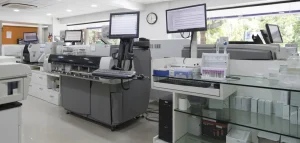
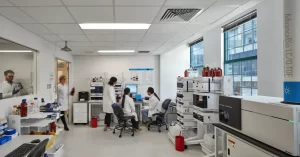
CCIR offers another route for students interested in experimental research through its CCIR Lab. Located on the MIT campus in Boston, the facility provides a professional Biosafety Level 2 environment where eligible CCIR students can explore pre-approved experiments or propose their own projects for review. PhD-level laboratory managers supervise students during their experimental work.
Online engineering research programmes
Online research programmes allow students to work with academic mentors remotely. Depending on the project, students might analyse engineering datasets, develop mathematical models, write code, or investigate technical questions using computational tools.
This format is particularly suitable for research involving simulation, machine learning, structural analysis, and theoretical engineering.
CCIR Academy offers two principal online research pathways for high school students.
The Cambridge Future Scholar Research Programme is a 13-week programme that combines structured academic teaching with independent research. Students work in small groups of two to five, receiving instruction from a professor mentor and additional guidance from a teaching assistant. They complete an original research paper based on their chosen research area.
The 1-on-1 Research Mentorship Programme offers a more individualised experience. Students work directly with a professor mentor to develop a research project around their academic interests. The programme typically lasts seven to 14 weeks, with the research direction and supervision tailored to the student.
Both programmes allow exceptional high school students around the world to conduct research under professors from Oxford, Cambridge, Harvard, MIT, and Stanford.
Unlike engineering courses that focus primarily on teaching technical skills, CCIR’s programmes are designed around independent academic research. Students investigate a specific question, evaluate existing research, develop an appropriate methodology, and produce an original academic paper.
Independent engineering research with a professor
Some students already have a specific engineering question they want to investigate. In this case, a professor-led research programme can provide a structured way to develop an independent project with academic guidance.
Independent research involves developing a research question, reviewing existing academic literature, selecting an appropriate methodology, and evaluating the findings.
For example, a student interested in automotive engineering might investigate how machine learning can predict vehicle drag coefficients. Another interested in aerospace engineering could examine the relationship between microfluidics and spacecraft cooling.
Through CCIR Academy, students can pursue these interests through professor-led research. They work directly with faculty from leading universities to develop original projects based on their academic interests. Rather than simply following a pre-designed engineering project, students investigate their own research questions with guidance from an expert in their chosen field.
How to Choose the Right Engineering Research Opportunity
The engineering discipline you want to explore is only one consideration. You should also evaluate the academic supervision, research expectations, available resources, and final outcomes.
1. Consider the research areas and faculty expertise
Start by identifying the engineering questions that genuinely interest you. You do not need a complete research proposal, but you should understand the problems you want to investigate.
Look at the academic expertise available within each programme. CCIR Academy offers more than 170 research areas across STEM, engineering, business, the humanities, and social sciences. Engineering research courses cover subjects such as aerospace engineering, robotics, microprocessors, materials science, and biomedical engineering.
Students work with current university professors rather than PhD students as their primary research mentors. When applying, demonstrate your understanding of the subject and explain what interests you about the research area. A clear academic motivation and willingness to engage with challenging questions can help potential mentors assess your suitability.
2. Consider the research output and publication support
Some programmes focus on practical experience, while others conclude with a poster presentation or group project. If you want to develop an independent academic paper, look for structured writing guidance and continued research support.
At CCIR, students work towards an original research paper under professor supervision. The academic team and writing centre provide feedback, while the publication team helps students identify suitable journals and conferences.
CCIR students have achieved notable research outcomes across engineering and related disciplines. For example, Aarush Mohan’s research on predicting vehicle drag coefficients using machine learning was accepted at CADSCOM 2026. This prestigious conference took place at Minnesota State University, and was organised by the Twin Cities ACM Chapter, a professional chapter of the Association for Computing Machinery (ACM).
Similarly, Aaditya Mirkar’s research on microfluidics and nanofluids for spacecraft cooling was accepted at the 14th Asia Conference on Mechanical and Materials Engineering (ACMME 2026). Held in Osaka, Japan, the international conference brought together participants from more than 20 countries. Keynote speakers included Professor Ninshu Ma of Osaka University and Professor Lijie Grace Zhang of George Washington University. The event also received support from institutions including the University of Warwick and the Institution of Engineering and Technology (IET).
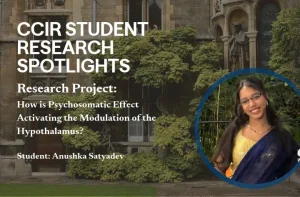
Explore more research achievements by CCIR alumni through the CCIR Student Research Spotlights.
3. Look at academic recognition and programme selectivity
Consider the institutions represented by a programme’s faculty, the quality of its research, and its academic expectations.
CCIR Academy has a selective admissions process, accepting approximately 15–20% of applicants worldwide. Its students include academically accomplished individuals from leading high schools, many with strong academic and extracurricular achievements.
CCIR also offers formal academic recognition. Students who successfully complete the Cambridge Future Scholar Research Programme or 1-on-1 Research Mentorship can receive 10 UK government-recognised undergraduate credits, equivalent to 2.5 US college credits, at no additional cost.
This accreditation is a significant distinction. CCIR has undergone a rigorous approval and quality-assurance process to offer credit-bearing academic research within the UK-regulated qualifications framework overseen by Ofqual.
These credits provide formal recognition of students’ academic achievements, highlighting the rigour and depth of their research experience, with the potential to transfer credits to the university or undergraduate institution they ultimately attend, subject to the institution’s credit transfer policies.
4. Explore opportunities beyond the programme
Consider whether a programme offers opportunities to develop and present your research after its teaching period ends.
CCIR extends its academic community through the CCIR Student Research Symposium. Selected current and former students can apply to present their research at the University of Cambridge.
The symposium also features professors from Cambridge and Oxford, alongside Nobel laureates. Previous keynote speakers have included:
- Dr Barry Barish – 2017 Nobel Prize in Physics laureate.
- Dr Thomas R. Cech – 1989 Nobel Prize in Chemistry laureate.
- Dr Aaron Ciechanover – 2004 Nobel Prize in Chemistry laureate.
This gives students an opportunity to present their findings to a wider academic audience and engage with researchers across disciplines.
5. Check eligibility, duration, and financial support
Before applying, review the practical requirements of each opportunity:
- Eligibility: Does the programme accept your age, grade level, and country of residence?
- Duration: Can you commit to the full programme alongside school?
- Format: Does the research require laboratory access, or can it be completed online?
- Cost: What does the tuition cover? Are scholarships or financial aid available?
- Research requirements: Do you need previous experience in programming, mathematics, or engineering?
- Final output: Will you complete an independent paper, presentation, or practical project?
CCIR’s 1-on-1 Research Mentorship accepts applications throughout the year, while the Cambridge Future Scholar Research Programme follows scheduled cohorts. Applicants are also considered for merit-based scholarships, with need-based financial aid available under the relevant policies.
Visit the CCIR Academy FAQs for further information about eligibility, applications, and programme requirements.
How to Prepare for an Engineering Research Programme
You do not need previous research experience to explore engineering research. However, developing your technical knowledge and identifying an area of interest can help you prepare for the application process.
- Strengthen your mathematical foundations. Engineering research often involves algebra, calculus, statistics, and mathematical modelling. Review the concepts relevant to your chosen discipline.
- Explore engineering beyond the classroom. Read technical articles, research summaries, and engineering case studies. Look at how researchers approach problems in your area of interest.
- Develop relevant technical skills. Depending on your project, programming languages such as Python, MATLAB, or C may be useful. Familiarity with CAD software or simulation tools can also help.
- Identify a research question. Instead of choosing a broad topic such as robotics, consider a specific question about robotic movement, sensor accuracy, or machine learning.
- Read academic research. Explore published engineering papers to understand how researchers develop hypotheses, select methodologies, and present their findings.
- Be prepared to revise your ideas. Research rarely follows a predictable path. You may need to adjust your original question or methodology as you evaluate the available evidence.
CCIR’s admissions process assesses academic preparation, subject knowledge, and genuine interest in the chosen research area. Applicants should be prepared to explain what interests them about engineering and what they hope to investigate.
Frequently Asked Questions
What are the best engineering research opportunities for high school students?
The best opportunity depends on your engineering interests and the type of research experience you want. University laboratory programmes offer hands-on experience, while online research programmes can provide opportunities to investigate engineering problems through computational methods and mathematical modelling.
CCIR Academy offers professor-led research in areas such as aerospace engineering, robotics, materials science, and biomedical engineering. CCIR’s faculty come from leading universities including Oxford, Cambridge, Harvard, MIT, and more.
Can high school students participate in engineering research online?
Yes. Many engineering research projects can be conducted remotely using programming, mathematical modelling, simulations, and existing datasets.
CCIR Academy offers online research programmes where students investigate engineering questions with current university professors. Projects can explore areas such as robotics, aerospace systems, machine learning, and sustainable materials without requiring students to relocate.
Are there engineering internships for high school students?
Yes. Some universities, research institutions, and government laboratories offer engineering internships for high school students. These opportunities may involve assisting research teams, learning technical skills, or participating in supervised engineering projects.
However, eligibility can be restrictive. Some programmes only accept local students or applicants who meet specific citizenship requirements. CCIR provides a flexible alternative through online, professor-led engineering research programmes open to students worldwide.
Do I need previous engineering experience to join a research programme?
Not necessarily. Some programmes provide foundational teaching before students begin their research projects. However, advanced topics may require a good understanding of mathematics, physics, or programming.
CCIR evaluates applicants based on their academic preparation and genuine interest in their chosen subject. Students should review individual requirements before applying.
Can high school students publish engineering research?
Yes. High school students can publish engineering research or present their findings at academic conferences when their work meets the relevant standards.
At CCIR Academy, students receive guidance on academic writing and identifying suitable publication opportunities. Many students have had engineering-related research accepted at prestigious academic conferences, demonstrating the scope of work that high school researchers can pursue with appropriate mentorship.
What is the difference between an engineering research programme and an engineering course?
An engineering course generally focuses on teaching technical concepts and developing foundational skills. A research programme goes further by asking students to investigate a specific question, evaluate existing evidence, and develop an original project.
CCIR Academy combines advanced subject teaching with guided learning to build the knowledge and technical foundations students need to undertake more advanced, independent engineering research.
Explore Engineering Research with CCIR Academy
For students who want to explore engineering beyond the school curriculum, research offers an opportunity to investigate technical challenges and develop a deeper understanding of how engineering advances.
CCIR Academy provides two main pathways for high school students. The Cambridge Future Scholar Research Programme combines small-group teaching with independent research, while the 1-on-1 Research Mentorship offers individualised guidance from a professor whose expertise matches the student’s interests.
With professor mentors from leading universities, selective admissions, and formal UK government-recognised academic credits, CCIR offers a distinctive opportunity to pursue university-level engineering research while still in high school.
Visit CCIR Academy to explore the available research areas, compare programme formats, and learn about the admissions process.
Ready to Start Your Engineering Research Journey?
Interested in exploring aerospace engineering, robotics, materials science, biomedical engineering, or artificial intelligence? Take your interest in engineering beyond the classroom by developing an original research project with guidance from professor mentors at CCIR Academy.
Download the CCIR Research Programme Prospectus to explore our 170+ research areas, discover professor mentors from leading universities, compare our research programmes, review student outcomes, and learn about the application process.