
Research internships vary depending on the organisation offering them. One student might spend several weeks in a university laboratory, while another might help a researcher analyse data remotely.
Research internships for high school students vary in structure, supervision, and outcomes, so understanding these differences can help you choose an opportunity that fits your goals. This guide explains how research internships work and what to look for before applying.
Additionally, it also looks at how the Cambridge Centre for International Research (CCIR) gives high school students another route into research through professor-led programmes and individual mentorship.
What is a research internship for high school students?
A research internship for high school students is a structured, short-term program that places a student in a real research setting. The internship is usually under the guidance of a professor, graduate student, scientist, or other experienced researcher.
Instead of learning only about a subject from a textbook, the student participates in the process of investigating a question. For example, a student may help collect and analyse data so that they have a first-hand look at how knowledge is created. They may also review existing studies or contribute to a paper or presentation.
Regular classes rarely teach this process in depth, and that’s why research internships can offer a valuable opportunity for high school students. They allow students to move beyond theory and develop a clearer understanding of how research works in practice.
Research internship vs research programme vs research mentorships
Research internships, research programmes and research mentorships can all give high school students valuable research experience. However, the experience itself can be quite different.
The main difference is how much ownership you have over the research and how closely you work with a researcher. Here’s a quick comparison:
Research internship | Research programme | Research mentorship | |
Whose project? | An existing project within a research group | Your own project, developed through structured teaching | Your own project, developed with your mentor |
Your role | Contribute to ongoing research | Learn research methods and then conduct your own research | Develop and conduct an individual research project with one-to-one guidance |
Typical output | Research experience, sometimes a poster or other contribution | An independent research paper | An independent research paper |
CCIR option | CCIR does not offer traditional internships | Cambridge Future Scholar Research Programme: a 13-week programme with 2–5 students per course, taught by current professors | 1-on-1 Research Mentorship: one student, one Oxbridge or Ivy League faculty mentor, and one independent research project |
In a traditional research internship, particularly within an established research group, a student will usually contribute to work that is already underway. This can provide valuable insight into how research is conducted, but the student may have limited control over the project’s direction and may not have the opportunity to develop or publish an independent research paper.
At CCIR, our programmes are designed around giving students ownership of their research. Although we do not offer traditional research internships, our programmes let students develop and carry out their own research rather than simply assist with an existing project.
Where do research internships happen?
A research internship can happen in very different settings. Some high school students work in university laboratories alongside researchers, while others conduct research entirely online.
Labs and universities
University laboratories are one of the most traditional settings for research internships. Students may work alongside professors, graduate students and other researchers, gaining insight into how research is conducted in a professional setting.
However, these opportunities can be difficult for high school students to access. Some laboratories cannot accept students under 18 because of safety and insurance requirements. Others take only a small number of interns each year, while formal university programmes may have specific eligibility requirements.
The NIH Summer Internship Program in the United States is one example. At the time of writing, NIH states that applicants must be graduating high school seniors who will be 18 by 30 September of the programme year.
These requirements make certain programmes only accessible to a specific group of students. If you are considering a university or laboratory internship, check the current eligibility requirements carefully before applying.
For students who want hands-on laboratory experience without joining an existing research team, CCIR Lab offers access to its lab at MIT’s campus in Cambridge, Massachusetts. Lab access is arranged through the CCIR Academics Team at no additional cost, with PhD-level lab managers supervising students on site.
As a result, CCIR students have the opportunity to take their independent research beyond the online programme when their projects require hands-on laboratory work.
Online and virtual
Not all research requires a physical laboratory. In many fields, students can investigate questions remotely by analysing existing data, reviewing academic research or using computational tools. Advances in machine learning and data science have created new opportunities for STEM research. Students can now explore complex questions without working in a traditional laboratory.
Meanwhile, online research opportunities are particularly well-suited to subjects such as economics, psychology, history, political science and computer science, where much of the work can be conducted from a computer.
A strong online research opportunity should give students more than access to virtual teaching. It should provide meaningful academic guidance, opportunities to engage with research questions and a clear outcome that demonstrates what they have learned.
Each year, CCIR admits a select group of highly motivated students from around the world to join an international academic community. Students have the opportunity to learn from professors and researchers from institutions including Cambridge and Oxford, while exploring questions at the forefront of academic research.
Beyond the research itself, students become part of a global cohort of ambitious and intellectually curious peers. They can exchange ideas, learn from different perspectives and build connections with students who share their interest in challenging academic work.
The Cambridge Future Scholar Research Programme offers more than 90 research courses each round across STEM, business, social sciences and the humanities. Subjects range from machine learning and cancer bioinformatics to international political economy and architectural theory. Each research course leads to an independent research project and paper, allowing students to apply what they have learned to a question of their own.
For more information, our guide to online research programmes for high school students explains how online research works in more detail and what students should consider when comparing programmes.
How much work does a research internship involve?
What you do during a research internship depends largely on the research group you join. In a busy laboratory, you may work primarily with a graduate student or postdoctoral researcher rather than the professor leading the project. Your day-to-day guidance may therefore come from a member of the research team, while the professor oversees the wider project.
Your work could involve carrying out experiments according to an established protocol, analysing data, reviewing academic literature or writing code to support the research. Some of these tasks may be repetitive at first, but they can provide useful insight into the careful and methodical nature of research. Before applying, find out who you will work with and how often you will receive guidance.
This differs from the model at CCIR, where students work directly with a professor from a leading university. The professor provides academic guidance throughout the student’s research, allowing them to develop their own project with direct support from an experienced researcher.
The time commitment can also vary. Some summer internships are full-time for several weeks, while others take place during the school year and have a smaller weekly commitment. If an opportunity describes its schedule as “flexible”, ask how many hours you are actually expected to work each week and when you will need to be available.
What to Consider When Choosing Research Internships for High School Students
Research opportunities differ in eligibility, cost and selection criteria. Understand these details before applying, especially when comparing traditional internships with structured programmes.
Eligibility and experience
Research internships often have requirements around age, year group, location or residency. Some may also ask for particular grades or subject experience.
Previous research experience is not usually essential at the high school level. Still, certain laboratory placements may expect students to have relevant skills, such as coding experience or a strong background in science.
Cost
Internships fall into three groups. Some formal schemes pay a stipend, as NIH’s does. Many informal lab placements are unpaid but free, while some organisations charge a fee for a placement or access to mentors.
Free opportunities can still be highly competitive. Many laboratories have capacity for only one or two students at a time, and high school students may be competing with undergraduate and graduate students who are also looking for research experience.
If you are considering a paid opportunity, look closely at what the fee includes and how the programme is structured. Our guide to free research programmes for high school students looks at this in more depth.
Applying
The application process for a research internship may include a CV, academic transcript, personal statement or teacher reference. For informal laboratory placements, students may also contact researchers directly. A thoughtful email that shows you have read and understood a researcher’s work can be more effective than a generic internship request.
What you come away with
From an internship, you might gain lab or coding skills, a sense of research culture and a reference from someone who watched you work. Some end with a poster or presentation. Being credited in a lab’s publication is possible, but up to the research group.
From a CCIR programme, the main output is an independent research paper supervised by a professor from Cambridge, Oxford or an Ivy League university. Around that paper, you receive:
- A signed evaluation from your mentor, issued by the programme
- The option to request a tailored letter from your mentor, which cannot be guaranteed
- Feedback on your drafts from CCIR’s writing centre, staffed by Oxbridge students and alumni
- An independent ethics review for research involving human subjects,
- Guidance on submitting to legitimate undergraduate or industry and graduate-level journals and conferences, and away from pay-to-publish outlets
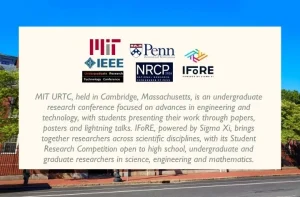
CCIR’s aim is for students to publish, and past students have had work accepted by Stanford’s Intersect journal, the IEEE MIT Undergraduate Research Technology Conference, as well as other leading journals and conferences. The Student Research Spotlights tell some of these stories in the students’ own words.
Remember that no option guarantees anything in university admissions. What each gives you is real work you can talk about honestly.
How to decide on a research internship
Ask these questions at any opportunity before you accept:
- What exactly will I do, and can you show me examples from previous students?
- Who supervises me, and how often will we meet?
- What will I have at the end?
- How many hours a week will it take?
- Am I eligible in practice, given my age, year group and location?
- What does it cost, and what does that pay for?
Then ask what you want from the experience. If you want to develop your own research paper, work towards publishing your research and build a close working relationship with professors from leading universities, a structured research programme or mentorship may be a better fit.
At CCIR, both the Cambridge Future Scholar Research Programme and 1-on-1 Research Mentorship give students the freedom to choose a research topic that interests them and develop an original project around it. Students are encouraged to pursue research that addresses meaningful questions and has the potential to make an impact.
Through the Cambridge Future Scholar Research Programme, students learn from professors and researchers from leading universities while developing their own research alongside a global cohort of ambitious peers. The 1-on-1 Research Mentorship provides a more personalised research experience, with each student working closely with a professor from institutions such as Cambridge, Oxford and leading US universities.
In both programmes, students work towards producing an independent research paper, with the opportunity to pursue publication through prestigious academic journals and conferences. CCIR admits around 15-20% of applicants worldwide, and many students arrive from top high schools with strong academic or extracurricular records.
CCIR also hosts the CCIR Research Symposium, to which professors from Cambridge and Oxford and Nobel laureates are invited. Parents and counsellors can find more on our page for parents and counsellors.
Be wary of any opportunity that promises admission advantages, gives no details on supervision, or asks you to pay for a “guaranteed” publication.
Frequently Asked Questions
Can high school students get research internships?
Yes, but they can be highly competitive. Labs often have limited places and may prefer to accept undergraduate or graduate students, while age and insurance requirements can further limit opportunities. If you cannot find a placement, a structured research programme can offer supervised research with current professors without requiring a lab contact.
Are there online or virtual research internships for high school students?
Yes, mostly in subjects that rely on data, texts or code. Check who supervises you and what you will deliver. If your goal is your own project online, CCIR’s Future Scholar Research Programme and 1-on-1 Mentorship are both fully online, with a finished paper as the outcome.
Are there free research internships for high school students?
Some. A few formal schemes are free and even pay a stipend, while many informal placements charge nothing, though they can be competitive. If you are considering a paid programme, compare what the cost includes. CCIR offers financial aid and automatically considers every applicant for merit-based scholarships.
Do I need previous research experience?
Not necessarily. CCIR does not require prior research experience, although previous experience may strengthen your application, particularly because admission is highly competitive. CCIR research programmes are designed to support students as they develop their research skills and work on their own projects.
Is a research internship better than a research programme?
No. They do different things. An internship shows you how an existing team works, while a programme or mentorship teaches you to run your own project and write it up. Choose according to your goal.
How do I find a research internship if I have no connections?
Start by researching formal opportunities at universities, hospitals and research institutes, and check their current eligibility requirements. You can also contact researchers whose work interests you. Send a concise, personalised email explaining your interests and why you are reaching out. Be prepared for limited responses, as these opportunities can be highly competitive.
If you are looking for a research opportunity that does not require an existing academic connection, contact CCIR to ask about programme options, eligibility, and which format best suits your research interests.
Conclusion
A research internship can be a useful way to see how a research team works and contribute to an ongoing project. If you want to develop your own research question, learn how to conduct independent research and produce a paper, a structured research programme or mentorship may be a better fit. The right choice depends on the type of experience you want to gain and how much guidance you need along the way.
For students who want to develop their own research paper with current professors from Cambridge, Oxford and leading US universities, CCIR Academy offers both options.
Cambridge Future Scholar Research Programme combines small-group teaching with independent research, while the 1-on-1 Research Mentorship provides individual guidance from a faculty mentor. Explore the CCIR FAQ, prospectus and programme pages to find the option that best matches your research goals.
Ready to start your research journey?
Discover how you can turn your academic interests into an original research project with CCIR Academy. Download the CCIR Research Programme Prospectus to explore our 170+ research areas, learn more about our professor mentors from leading universities and discover CCIR’s research programmes, student outcomes and application process.