Nadine Donia is a student at Lycée Français International D’Al Khobar in Saudi Arabia. She has a strong interest in neuroscience, artificial intelligence, and their impact on society. Her academic achievements include winning a scholarship to the Immerse Cambridge programme. She earned it through an essay on neuroscience and its societal impact.
Nadine is also the founder and CEO of Help, a mobile application that sends distress signals to verified contacts when activated. Through this initiative, she explores how technology can address real-world needs.
Beyond her entrepreneurial work, Nadine continues to develop her academic skills. She completed an introductory neuroscience course through MIT OpenCourseWare. She also took several computer science courses on freeCodeCamp. In addition, she writes a newsletter about neuroscience, AI, and their societal implications. The newsletter has attracted over 1,500 subscribers. She is also working on a book about AI and the need for global regulation.
Nadine’s research paper, Sentiment Analysis of Arabic-English Code-Switched Data: A Comparative Study of Machine Learning and Lexicon-Based Approaches, was accepted at the 34th Meeting of Computational Linguistics in the Netherlands (CLIN 34).
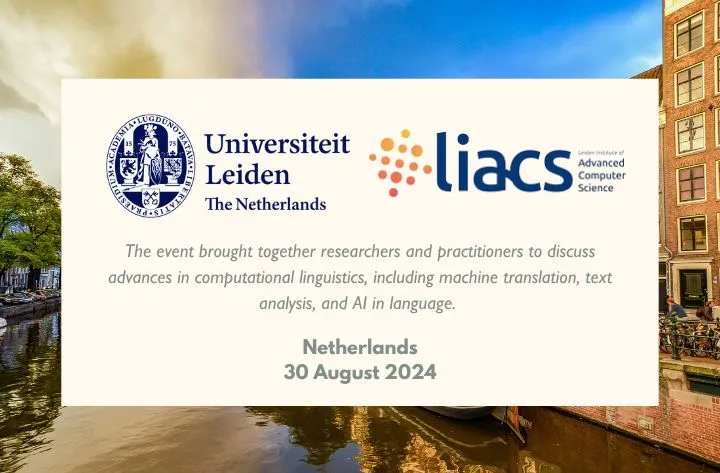
Leiden University hosted the conference on 30 August 2024. The event brought together experts to discuss developments in computational linguistics. Topics included AI applications, machine translation, and text analysis.
Nadine’s research highlights the role of machine learning in analysing Arabic-English code-switched language. Her achievement reflects her interest in applying computational methods to complex language problems.
Congratulations to Nadine on this achievement!
Ready to explore research in artificial intelligence and computational linguistics?
Turn your interests in artificial intelligence, natural language processing, and computational linguistics into an original research project with guidance from experienced professor mentors at CCIR Academy.
Download the CCIR Research Programme Prospectus to explore our 170+ research areas, learn about our Cambridge Future Scholar Research Programme and 1-on-1 Research Mentorship, and discover our professor mentors, student outcomes, scholarships, and application process.