For high school students who want to explore their interests and pursue meaningful extracurricular activities, summer is an ideal time to conduct research, dive deeper into subjects beyond the classroom, and gain hands-on experience in areas they may want to pursue in the future.
A strong research programme should give you the chance to work closely with an experienced mentor, develop a genuine research project and, where possible, take that work towards publication. It should also fit around your schedule, whether that means a flexible online programme or a more intensive in-person experience.
With so many summer research programmes for high school students available, knowing what to look for can help you find one that offers both the academic experience you are looking for and the flexibility you need.
Programme length and structure
The structure of a summer research programme can shape the entire experience. If you want an immersive, on-campus experience, residential programmes such as RSI and BU RISE offer intensive summer research in-person academic setting.
However, not every student can commit their entire summer to a residential programme. If you already have family plans or other commitments, an online programme can allow you to gain meaningful research experience without putting the rest of your summer on hold.
For instance, for high school students who want to do research with professors from leading universities while also receiving substantial support, CCIR’s research programmes, as a virtual research mentorship, offer a more flexible alternative to traditional residential programmes. Students can work remotely with their professors on impactful research projects without giving up their other summer commitments.
Before you apply, consider how much time you can realistically commit and what kind of experience you want from the summer. An in-person programme may suit you if you want to spend time on campus, experience university life and meet other students in person. On the other hand, an online research programme may be a better fit if you want to balance research with other commitments, especially during your sophomore or junior years, when summers are often packed with internships, academic programmes and other extracurricular activities.
Application deadlines
If you are considering a prestigious summer research programme, do not wait until summer to start looking. Many selective programmes have application deadlines several months before the programme begins, so planning ahead can make a big difference.
For example, programmes such as RSI and BU RISE have competitive application processes that require students to prepare their materials well in advance.
CCIR’s research programmes are also highly competitive. Applicants are required to submit their academic transcript and a personal statement, and shortlisted students are invited to interview. The CCIR 1-on-1 Research Mentorship Programme runs throughout the year, while the CCIR Future Scholar Research Programme offers three cohorts annually. This can give students more flexibility when planning their research around school and other commitments.
It is worth checking each programme’s website early in the academic year and noting when applications open, the deadline, and what you need to submit. Deadlines can also change from year to year, so always check the programme’s current website rather than relying on an older article or list of summer research programmes.
Eligibility and grade requirements
Eligibility requirements can vary significantly between summer research programmes. Some are only open to US citizens or permanent residents, while others accept students from around the world. Age, grade level and academic background can also affect whether you are eligible to apply.
For example:
- BU RISE: Open to US citizens and permanent residents entering their senior year of high school.
- NIH Summer Internship Program: Requires applicants to meet specific US citizenship or residency and education requirements.
- RSI: Accepts international students from participating countries, but these students must apply through their country’s designated selection process.
- CCIR: Accepts students from around the world, making it a great option for international students.
If you are applying internationally, check these requirements before starting your application. A programme may be academically suitable but still unavailable to you because of your citizenship, residency or grade level. But if you are an international student looking to join a prestigious research programme, it might be a good idea to consider CCIR.
Research fields on offer
The research field you want to explore should be one of the first things you consider when comparing summer programmes. Some prestigious programmes are focused almost entirely on STEM. BU RISE, for example, centres its research opportunities around fields such as science, engineering and computer science, while RSI is similarly focused on STEM research.
If your interests lie outside these areas, CCIR could be a good option. CCIR Academy research programmes give students the opportunity to explore a wide range of fields across STEM, the humanities, social sciences, business and beyond, including interdisciplinary areas such as machine learning and linguistics, computational biology, neuroscience, data science and environmental studies.
Many students may not yet have a specific research interest in mind, or may be deciding between several fields. In that case, CCIR can be a useful option because of the breadth of research areas available.
Research format: online vs in-person
This is one of the biggest differences between programmes, and it affects almost everything else, including cost, location, and how the research itself gets done.
In-person programmes typically take place on a university campus, in a lab, or at a research facility. They tend to involve hands-on lab work, direct access to equipment, and daily face-to-face contact with mentors and peers.
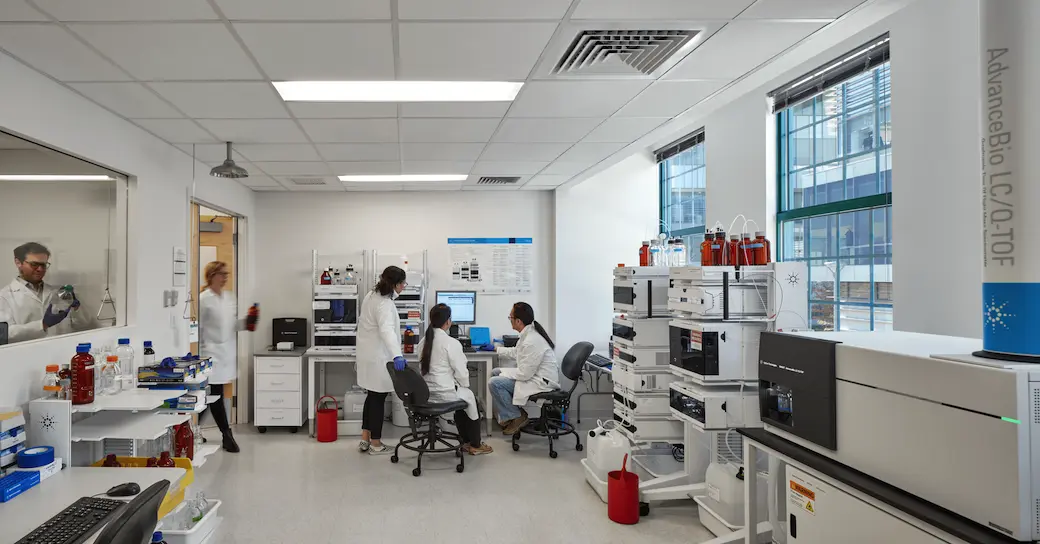
However, online research does not necessarily mean giving up hands-on experience. CCIR’s research programmes are primarily online, but students can also access CCIR’s research life science laboratories on MIT campus, and in Silicon Valley. Students can conduct experiments at these facilities with support from PhD-level lab managers, subject to project requirements and approval.
If you’re deciding between the two, think about what you’d actually be doing day to day. Some students value a highly social environment and want to immerse themselves in campus life, while others place more value on flexibility and the ability to balance research with other academic commitments.
Cost, scholarships and financial support
Some in-person programmes, including RSI and BU RISE, may offer scholarships or financial support, but students still need to consider the cost of travelling to campus and staying there. For international students, flights, accommodation and other living expenses can add significantly to the overall cost.
CCIR’s Academy research programmes are delivered online, so students can work with their professors remotely without relocating for the programme. CCIR also provides opportunities for students to conduct hands-on research at its labs, including its lab on the MIT campus. Scholarships are available to applicants, and students facing economic hardship can also apply for need-based financial aid.
When applying, it is also worth checking whether your school offers funding, grants or other financial support for summer research programmes.
Mentorship
Who you work with can matter just as much as what you work on. Some programmes pair students with professors, while others are led by postgraduate or PhD students. There are also programmes that use peer mentorship, with relatively little faculty involvement. None of these approaches is automatically better than the others, but each can shape the type and depth of guidance you receive.
The experience of your mentor can also influence the kind of feedback you get. A professor with years of research experience may offer a different perspective from a graduate student who is still developing their own research skills. They can also bring students closer to the cutting edge of their field, giving them a better understanding of how research actually works in a real academic setting.
For example, CCIR 1-on-1 Research Mentorship pairs admitted students with current teaching faculty members from universities including Oxford, Cambridge, Harvard, MIT, Stanford and other Ivy League institutions. Working directly with professors gives students the opportunity to engage with cutting-edge research and ideas at the forefront of their fields.
The research project itself
A research programme should give you the opportunity to work on a genuine research project, and not just complete coursework or attend lectures. The exact structure will vary, but you should have some involvement in developing a research question.
Before applying, look at how the project is structured. Ask yourself if you choose your own topic or select from a set of options. Additionally, what kind of guidance will you receive if you run into problems or need to change direction?
Be cautious of anything that markets itself as a research programme but is really structured like a course with no independent output. A meaningful research experience should involve you asking a question, working through a process to investigate it, and producing something at the end that reflects your own thinking.
Research outcomes and publication
Ultimately, you want to work on a meaningful research project that allows you to deepen your knowledge in a particular area and gives you a concrete outcome to showcase in university applications. Ideally, this could lead to a research paper, presentation or even a publication.
Many programmes, such as RSI and Boston University’s RISE programme, do not provide continued research support after the programme ends, so students may need to navigate the publication process independently.
However, CCIR is the only prestigious research programme that continues to support students through the publication process even after the programme has ended. For instance, CCIR students have published their research projects in top journals and conferences, across fields such as machine learning, black holes, misinformation about immigrants, etc. You can find more examples on the CCIR Student Research Spotlight page.
When comparing programmes, consider not only what you will learn, but also whether the programme will continue to support you through the publication process and help you take your research further.
Choosing between programmes
Once you have a shortlist, compare the programmes based on fit rather than reputation.
Ask yourself:
- Which programme offers the kind of research I actually want to do?
- Will I have enough time to complete the project properly?
- Does the level of independence suit my experience?
- What will I actually produce by the end?
- Can I realistically manage the cost, travel, and time commitment?
The right choice depends on what you want from the experience.
Programmes like CCIR’s Cambridge Future Scholar Research Programme or 1-on-1 Research Mentorship Programme are built around flexible, professor-led online research. These programmes allow talented high school students to work directly with professors from leading universities, including Oxford, Cambridge, Harvard, MIT and Stanford.
With CCIR, students can continue working virtually with their professors while also having the opportunity to take part in hands-on life science research at CCIR’s labs on the MIT campus or in Silicon Valley.
To start, CCIR Admissions Page is a useful place to learn about the overall structure of the programme and the admission process.
FAQs
How long do summer research programmes for high school students usually last?
Most run between 2 and 8 weeks, but Cambridge Future Scholar Research Programme or 1-on-1 Research Mentorship Programme is 13–14 weeks.This longer timeframe gives students more opportunity to develop a polished, in-depth research project. Always check the exact programme schedule rather than making assumptions based on its general reputation.
Do I need previous research experience to apply?
Not usually. Many programmes, including selective ones, are designed for students with no prior research background and build research skills from the ground up. What matters more is genuine interest in the subject and a willingness to work through an open-ended process.
Are summer research programmes only for STEM students?
No. While STEM programmes are common, students can also find research opportunities in the humanities, social sciences and other fields. CCIR Academy offers more than 170+ research areas, including subjects such as economics, international relations, history, philosophy and sociology, alongside STEM and interdisciplinary research.
Is an online summer research programme as valuable as an in-person one?
Yes. With computational tools, open datasets and online research resources, students can now carry out meaningful research in many areas of STEM without being in a physical lab. CCIR students have worked on projects ranging from machine learning to astrophysics, with some going on to publish their work in leading conferences and journals, including the American Astronomical Society and the International Forum on Research Excellence.
Will a summer research programme help me get into a good university?
Yes. A good research programme can strengthen your application by giving you meaningful academic experience and independent research skills. For instance, 30.81% of CCIR’s US-bound alumni went on to study at an Ivy League university, Stanford or MIT, according to CCIR’s alumni data.