STEM research gives high school students the opportunity to investigate scientific questions, apply mathematical concepts, and explore technologies beyond the school curriculum. Through these experiences, students can contribute to ongoing research, develop new insights, and begin making meaningful contributions to the scientific community.
From analysing astronomical data to studying genetic therapies or developing machine learning models, students can pursue research in a wide range of fields.
However, the right opportunity depends on your interests, the type of research you want to conduct, and the level of academic guidance you need. This guide explores the main options available, what to look for when comparing programmes, and how CCIR Academy helps students pursue advanced STEM research with professors from leading universities.
What STEM Research Opportunities Are Available for High School Students?
STEM research covers science, technology, engineering, and mathematics. Within these broad categories, students can explore subjects ranging from molecular biology and robotics to astrophysics and artificial intelligence.
Before looking at individual programmes, consider which type of research interests you most.
Laboratory and experimental research
Experimental research involves testing hypotheses, collecting observations, and analysing results. Students might investigate chemical reactions, study cellular processes, or examine how different materials behave under specific conditions.
University laboratories and research institutes sometimes offer summer programmes or internships where high school students work alongside established researchers. These opportunities can provide valuable exposure to laboratory equipment, experimental methods, and research environments.
CCIR offers a route for students interested in experimental science. Through the CCIR Lab in Boston, located on the MIT campus, enrolled students can explore pre-approved experiments or propose their own projects for review. PhD-level lab managers supervise research on site, and the facility provides a professional Biosafety Level 2 environment.
Lab access is available to eligible CCIR student researchers without an additional access fee. This option allows students to pursue independent research with academic mentorship while accessing laboratory facilities when their projects require experimental work.
Computational research and artificial intelligence
Computational research uses programming, mathematical models, and existing datasets to investigate questions that might be difficult to answer through experiments alone.
For example, students could use machine learning to classify astronomical objects, model the spread of infectious diseases, or investigate how artificial intelligence processes human language.
These projects can be particularly suitable for online research because much of the work takes place on a computer. However, students still need a clear research question, an appropriate methodology, and reliable academic guidance.
Through CCIR Academy, students can develop original projects with professor mentors rather than limiting their experience to coding exercises or pre-designed coursework.
CCIR student research illustrates the range of questions students can investigate. For example, Pranav Manne’s research on machine learning for chemical reaction optimisation was accepted at three research conferences in 2026.
These included the National Research Conference at Penn, hosted at the University of Pennsylvania; the MIT Undergraduate Research Technology Conference (MIT URTC), which showcases student research in engineering and technology; and the IFoRE Student Research Competition, organised by Sigma Xi, an international scientific research honour society.
These events provide platforms for students to present their findings, engage with other researchers, and contribute to academic discussions. Pranav’s work applied machine learning to optimise chemical reactions, demonstrating how high school students can pursue interdisciplinary research and share their findings with the wider scientific community.
Engineering and applied mathematics
Engineering research examines how scientific and mathematical principles can solve practical problems. Depending on the project, students might investigate robotics, aerospace engineering, materials science, renewable energy, or the optimisation of mechanical systems.
Applied mathematics can also support these investigations through simulation, statistical analysis, and mathematical modelling.
For students interested in these areas, a strong research opportunity should involve more than learning technical concepts. It should allow them to use those concepts to investigate a specific problem and evaluate their findings.
CCIR Academy offers interdisciplinary research options that connect engineering and mathematics with computing, physics, and other scientific fields. Students can work with professors to develop projects suited to their interests and explore questions that cross traditional subject boundaries.
Biomedical science and interdisciplinary STEM
Biomedical research combines fields such as biology, chemistry, medicine, and computational science to investigate human health and disease.
Students might explore gene therapy, cancer biology, neuroscience, drug discovery, or the use of artificial intelligence in medical research. These topics often require students to understand scientific literature, evaluate evidence, and identify limitations in existing research.
CCIR Academy offers research opportunities in areas such as precision medicine, genomic data analysis, computational biology, and AI-driven drug discovery.
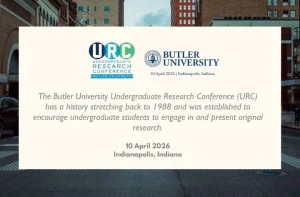
For example, CCIR student Amanda Chua investigated the potential application of stem cells in cancer treatment. Her research was accepted for presentation at the 2025 National Conference on Undergraduate Research (NCUR), one of the largest US conferences dedicated to undergraduate research. The annual event brings together ambitious student researchers to share their findings across disciplines, from biomedical science to engineering and the social sciences.
For a high school student, having research accepted at a national conference primarily dedicated to undergraduate scholarship is a significant achievement. It offers an opportunity to share original work with a wider academic audience and engage with the research community. You can read more about her project in the CCIR Student Research Spotlights.
STEM Research Programmes vs STEM Internships: What Is the Difference?
STEM research programmes and internships can both provide valuable experience, but they do not always give students the same level of independence.
Traditional internships place students within established research teams, where they contribute to ongoing work. Structured research programs teach research methods and guide students through developing their own projects. Research mentorships offer more individualised guidance, helping students investigate a specific question with support from an academic mentor.
|
Opportunity |
What you typically do |
What you might produce |
|
Laboratory internship |
Assist with an existing research project under supervision |
Research experience, data analysis, or a presentation |
|
University summer research programme |
Complete a research project within a structured, intensive programme |
A paper, poster, or research presentation |
|
Online STEM research programme |
Learn research methods and investigate a question using data, literature, or computational tools |
An independent research paper |
|
One-to-one research mentorship |
Develop your own project with individual academic guidance |
An independent research paper and potential publication submissions |
The exact experience depends on the programme. Before applying, check who supervises the research, how much responsibility you will have, and what you are expected to produce.
At CCIR Academy, both the Cambridge Future Scholar Research Programme and the 1-on-1 Research Mentorship are designed around independent research. Students work with current teaching faculty from universities including Oxford, Cambridge, Harvard, MIT, and Stanford. Rather than simply contributing to a professor’s existing project, students develop their own research questions with academic guidance.
Both options allow students to explore advanced STEM topics and work towards an independent academic paper. The better fit depends on whether you prefer collaborative learning with a small group or more individualised supervision.
Should You Choose an Online or In-Person STEM Research Opportunity?
The format of a research programme affects the work you can undertake, the resources available, and how you balance research with school.
Neither format is automatically better. The important question is whether the programme gives you the right tools and supervision for your research goals.
When does an in-person programme make sense?
In-person programmes can be particularly useful for experimental research that requires specialist equipment, laboratory facilities, or direct access to a research team.
For example, the Research Science Institute (RSI) combines STEM coursework with a five-week research internship. The programme is free to attend, but eligibility is restricted to students who meet its academic and other admissions requirements. International eligibility also depends on the participating countries.
Boston University’s Research in Science & Engineering (RISE) is another example. Its six-week programme offers laboratory internships and computational research practicums. For summer 2027, applicants must be entering their senior year and meet the programme’s US citizenship or permanent residency requirements.
These programmes are worth investigating if you meet the eligibility criteria and want an intensive summer experience.
However, in-person research can require relocation, travel expenses, and a substantial time commitment. Students should also check whether a programme’s available projects match their particular interests.
When is online STEM research a better fit?
Online research is suitable for many STEM projects that rely on computational tools, mathematical modelling, scientific literature, or existing datasets.
For example, you could investigate a machine learning model, analyse astronomical observations, or evaluate published findings about a biomedical question without needing to work in a physical laboratory.
CCIR Academy’s online programmes give students access to professor-led research without requiring them to relocate for the main programme. Students can explore specialised topics and develop independent projects while continuing to manage their other commitments.
For students who need experimental facilities, CCIR also offers access to its Boston laboratory. This means online research and laboratory experience do not have to be mutually exclusive, although lab access depends on project suitability, scheduling, and approval requirements.
How to Choose the Right STEM Research Programme
Once you have identified a field that interests you, compare opportunities based on the research experience they actually provide.
1. Check the research areas and available projects
Start with a question or subject that genuinely interests you. You do not need a complete research proposal, but you should have some idea of what you want to investigate.
For example, a student interested in medicine might explore computational biology or gene therapy. Someone interested in engineering might investigate materials science, robotics, or aerospace systems.
2. Understand who will supervise your research
Mentorship affects how you develop your research question, evaluate evidence, and respond to problems.
In some internships, students receive most of their day-to-day guidance from graduate students. Other programmes provide direct supervision from faculty members.
CCIR’s programmes are taught by current teaching faculty from leading universities, including Oxford, Cambridge, Harvard, MIT, and Stanford. These professors bring expertise in their research fields and can guide students through the process of developing an independent project.
3. Consider the expected research output
A research programme should make clear what you will work towards and how you will demonstrate your findings.
Some internships end with a presentation or poster. Others provide practical experience without requiring students to produce an independent paper. If your goal is to develop a substantial research project, look for a programme that supports academic writing and explains the next steps after the research is complete.
At CCIR, students work towards an independent research paper. The academic team and writing centre provide feedback, while students can receive guidance on identifying appropriate journals and conferences for submission.
Explore the CCIR Student Research Spotlights to see examples of projects and learn how students developed their research.
4. Look at academic reputation and selectivity
The reputation of a programme and the expertise of its faculty can be useful indicators when comparing STEM research opportunities. Consider the academics involved, the programme’s admissions process, and the standard of work students are expected to produce.
CCIR Academy has a selective admissions process, accepting around 15–20% of applicants worldwide. Many students arrive with strong academic records and previous extracurricular achievements. Admission is therefore competitive, and applicants should be prepared to explain their interests and academic goals.
The programme also offers opportunities to engage with a wider academic community through the CCIR Student Research Symposium. Selected current and former students can apply to present their research at the University of Cambridge. The symposium has also featured keynote contributions from Nobel laureates, including 2017 Nobel Prize in Physics laureate Barry Barish.
5. Check eligibility, cost, and time commitment
Before applying, review the practical requirements carefully. A programme may be academically appealing but unsuitable because of age restrictions, residency requirements, cost, or scheduling.
Consider the following questions:
- Eligibility: Does the programme accept your year group, age, and country of residence?
- Duration: Can you commit to the full programme alongside school and other activities?
- Cost: What does the tuition cover, and are scholarships or financial aid available?
- Research requirements: Do you need previous experience in programming, mathematics, or laboratory work?
- Final output: Will you complete a paper, presentation, or another research deliverable?
CCIR’s 1-on-1 Research Mentorship accepts applications throughout the year, while Cambridge Future Scholar follows scheduled cohorts. CCIR automatically considers applicants for merit-based scholarships, and students facing economic hardship can enquire about financial aid. Check the CCIR Academy FAQs and current prospectus for programme-specific requirements and tuition details.
When comparing free online STEM programmes for high school students with paid mentorships, evaluate what each option includes. Free courses can be useful for learning foundational concepts, but they may not provide individual supervision or support for an independent research paper. The right choice depends on the type of experience you want to gain.
How to Prepare for a STEM Research Opportunity
You do not need to have published a paper or completed formal research before applying. However, preparing in advance can help you identify suitable programmes and explain your interests more clearly.
- Explore a topic beyond the classroom. Read scientific articles, follow recent discoveries, or take an introductory course in a field that interests you.
- Develop a focused question. Instead of choosing a broad topic such as artificial intelligence, consider a more specific problem, such as how machine learning can improve the classification of astronomical objects.
- Build relevant skills. Depending on your chosen field, you may benefit from learning basic programming, statistics, mathematical modelling, or academic writing.
- Research potential mentors. Look at their areas of expertise and consider whether their research aligns with your interests.
- Prepare to explain your motivation. Think about why you want to investigate the topic and what you hope to understand through the research process.
CCIR’s admissions process assesses applicants’ academic preparation, subject knowledge, and genuine interest in their chosen field. You do not need to arrive with a complete research proposal, but you should be ready to discuss your interests and engage with challenging academic questions.
For further guidance, the CCIR page for parents and counsellors provides additional information about the programmes and the support available to students.
Frequently Asked Questions
What are the best STEM research opportunities for high school students?
The best opportunity depends on your interests and the type of research you want to conduct. Laboratory programmes suit students seeking experimental experience, while online research programmes can be ideal for computational projects and data analysis.
CCIR Academy offers professor-led research in fields such as artificial intelligence, biomedical science, engineering, and astrophysics. Students develop independent research papers with academic guidance and can explore laboratory access when their projects require experimental work.
Can high school students participate in STEM research online?
Yes. Many STEM projects can be conducted remotely using scientific literature, open datasets, programming, and computational modelling.
CCIR Academy’s online research programmes allow students to investigate advanced questions with professors from leading universities. Students can develop independent projects in areas such as machine learning, computational biology, and data science without relocating for the main programme.
Are there free online STEM programmes for high school students?
Yes. Free options include online courses, educational resources, and some structured research opportunities. However, free courses do not necessarily provide individual research supervision or support for producing an academic paper.
For example, the Research Science Institute is a free, intensive summer research programme for eligible students, although admission is highly competitive and eligibility restrictions apply. Students comparing free opportunities with alternative research opportunities should check what each option includes, particularly mentorship, research output, and publication support.
What is the difference between a STEM research programme and a STEM internship?
A STEM internship often involves contributing to an existing research project within a laboratory or research team. A research programme may provide structured teaching and supervision while students develop their own projects.
At CCIR Academy, the Cambridge Future Scholar Research Programme combines small-group teaching with independent research, while the 1-on-1 Research Mentorship provides individual guidance from a professor. Both are designed to help students develop an independent research paper.
Do you need previous research experience to join a STEM research programme?
Not always. Requirements vary by programme, and some opportunities are designed for students who are new to research.
CCIR considers applicants’ academic preparation and interest in their chosen subject. Previous research experience may be useful, but students should also demonstrate curiosity, a willingness to learn, and the ability to engage with challenging questions.
Can high school students publish STEM research?
Yes. High school students can publish research or present their findings at academic conferences when their work meets the relevant standards.
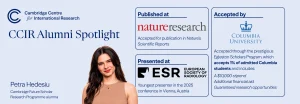
CCIR students receive academic writing feedback and guidance on identifying suitable publication opportunities. Many have had their work accepted by academic journals and conferences. These achievements reflect the hard work and dedication of students as they develop their ideas and contribute to the wider research community.
Explore STEM Research with CCIR Academy
For students who want to take their interest in STEM beyond the classroom, research offers an opportunity to engage with complex questions and develop the skills needed for academic inquiry. Finding the right programme means considering the subject you want to explore, the level of academic guidance you need, and the kind of research experience you hope to gain.
CCIR Academy provides structured pathways for high school students to pursue these interests under the guidance of experienced academics. Through its two main programmes, students can explore advanced STEM topics with support tailored to their academic goals.
Ready to take your interest in STEM research beyond the classroom?
Turn your curiosity about artificial intelligence, engineering, biomedical science, and other STEM fields into an original research project with guidance from experienced professor mentors at CCIR Academy.
Download the CCIR Research Programme Prospectus to explore our 170+ research areas, learn about our professor mentors from leading universities, compare our research programmes, discover student outcomes, and understand the application process.